 Pakistan
 UAE
UAE KSA
KSA UK
UK Canada
 USA
USA Australia
 French
 German
 Italian
 Chinese
 Dutch
Dutch

Step-by-Step Process of Filing 1099 Forms Accurately
By Accountsdaddy
Filing 1099 forms accurately is a critical compliance requirement for businesses working with independent contractors. Mistakes in reporting, missed deadlines, or incorrect classifications can lead to costly IRS penalties. With proper planning and a structured approach, businesses can ensure smooth, error-free 1099 filing.
This guide outlines a step-by-step process to file 1099 forms accurately, helping you stay compliant and efficient.
Step 1: Identify Who Requires a 1099 Form
The first step is determining which payments require reporting.
Businesses must issue a 1099 form to:
Independent contractors and freelancers
Consultants and service providers
Non-employee individuals or entities
Generally, payments of $600 or more annually require reporting using Form 1099-NEC.
Step 2: Collect and Verify Form W-9
Before making payments, request a Form W-9 from each contractor.
Ensure the following details are accurate:
Legal name
Business name (if applicable)
Address
Taxpayer Identification Number (TIN)
Proper documentation minimizes errors and avoids backup withholding issues.
Step 3: Maintain Accurate Payment Records
Accurate bookkeeping is essential for 1099 compliance.
Track:
Total payments made during the year
Payment dates and methods
Categorization of expenses
Using accounting software can streamline tracking and reduce manual errors.
Step 4: Select the Correct 1099 Form
Choosing the right form ensures proper reporting:
1099-NEC → Non-employee compensation
1099-MISC → Rent, royalties, and miscellaneous income
Incorrect form selection can trigger IRS notices.
Step 5: Prepare the 1099 Forms Carefully
While preparing the form, include:
Payer (business) information
Recipient (contractor) details
Total compensation paid
Double-check all entries to avoid rejections or corrections.
Step 6: File 1099 Forms with the IRS
Businesses can file:
Electronically (E-filing) – Fast, secure, and recommended
Paper filing – Requires Form 1096 summary
E-filing is mandatory for businesses filing multiple forms and reduces processing time.
Step 7: Distribute Copies to Recipients
Provide Copy B of the 1099 form to contractors.
Deadline: January 31
Timely distribution ensures recipients can accurately file their tax returns.
Step 8: Monitor Deadlines and Avoid Penalties
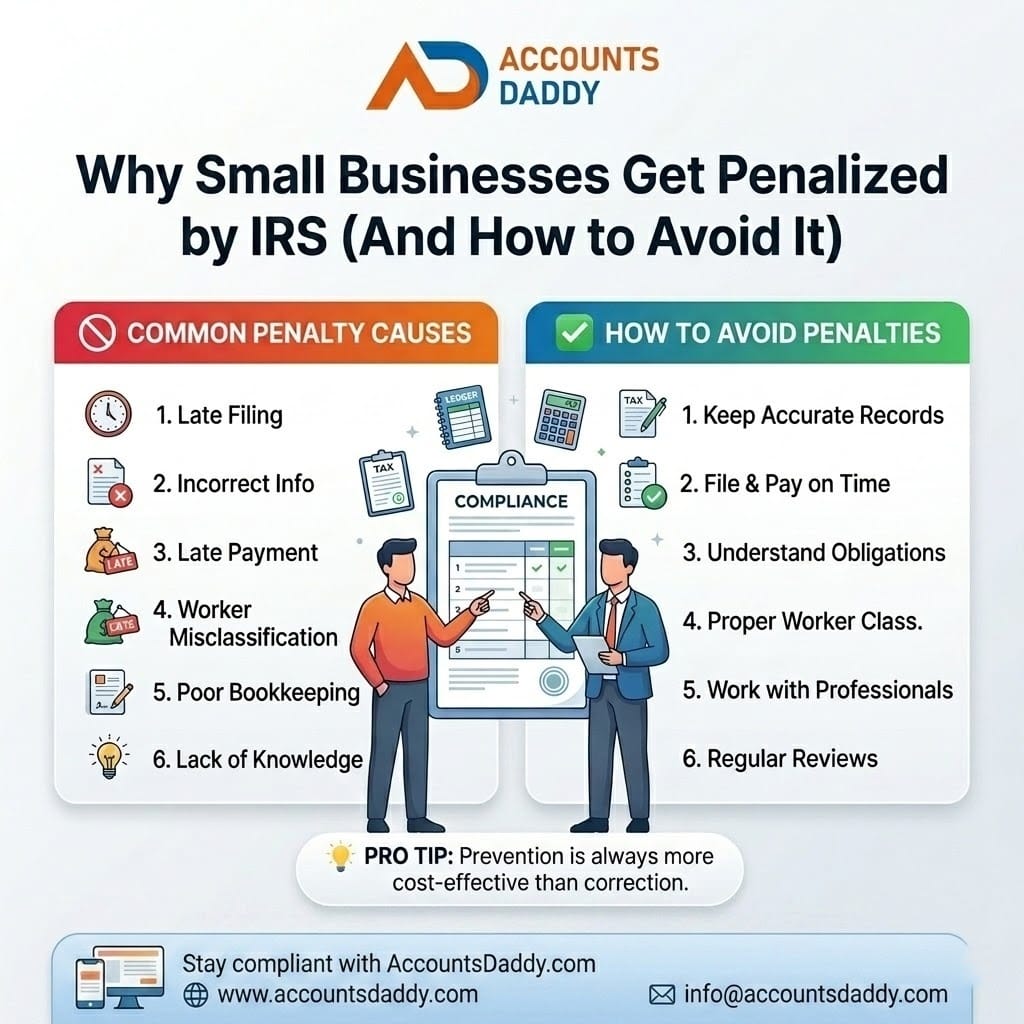
Missing deadlines or filing incorrect information can result in penalties.
Key risks include:
Late filing penalties
Incorrect TIN or amounts
Failure to issue forms
Staying proactive helps maintain compliance and avoid financial losses.
Step 9: Correct Errors Promptly
If errors occur:
File a corrected 1099 form
Update incorrect details immediately
Quick corrections prevent further compliance issues.
Why Choose Accountsdaddy for 1099 Filing?
At Accountsdaddy, we provide:
Accurate and compliant 1099 filing services
Timely submissions to avoid penalties
Bulk filing solutions for growing businesses
Cost-effective outsourcing options
Our expert team ensures your 1099 filings are handled with precision and professionalism.

Comments are closed