 Pakistan
 UAE
UAE KSA
KSA UK
UK Canada
 USA
USA Australia
 French
 German
 Italian
 Chinese
 Dutch
Dutch
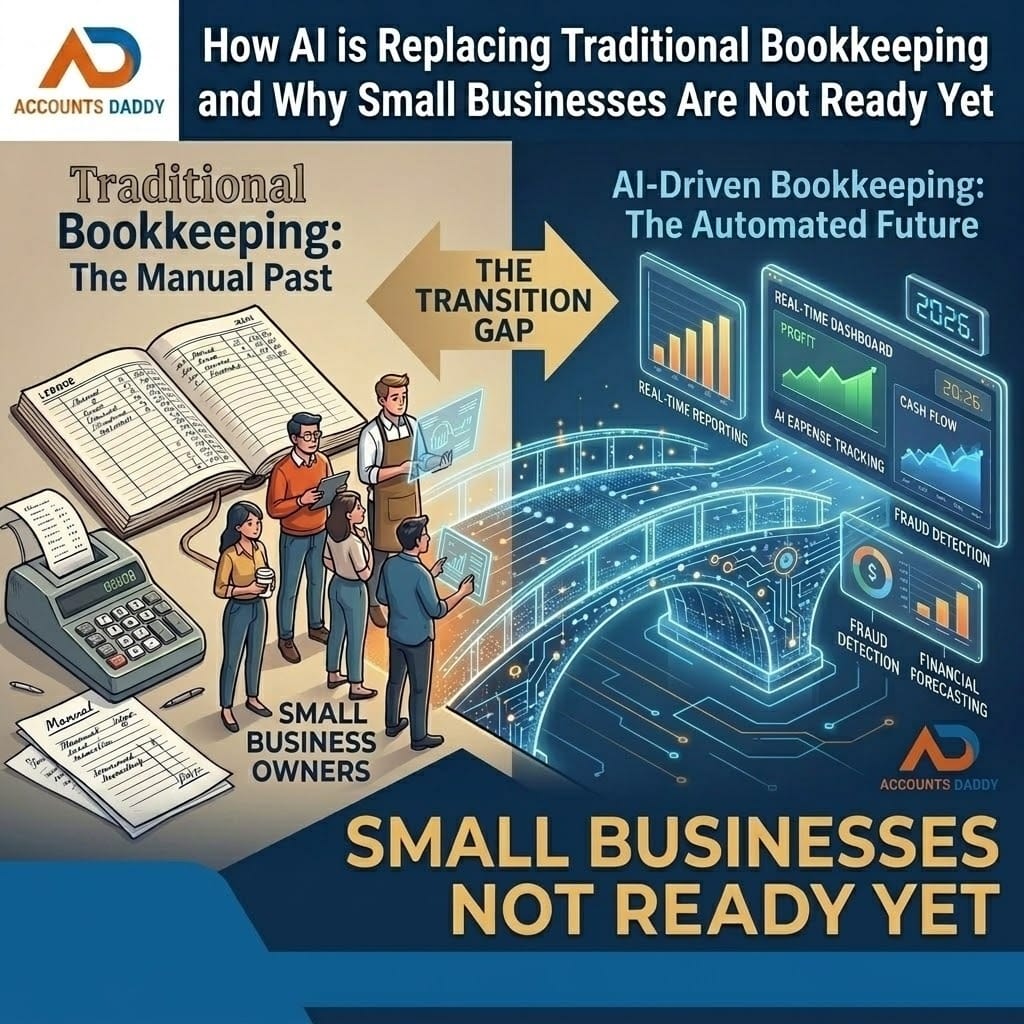
How AI is Replacing Traditional Bookkeeping And Why Small Businesses Are Not Ready Yet
The rise of AI in bookkeeping is transforming how businesses manage their finances. Traditional accounting methods,once dependent on manual data entry and periodic reporting are rapidly being replaced by automated accounting systems.
From real-time financial reporting to intelligent expense tracking, AI is reshaping the accounting industry. However, while large enterprises are adopting these innovations quickly, many small businesses are still lagging behind.
This gap is not just technological,it’s strategic. And it can significantly impact business growth.
What is AI in Bookkeeping?
AI bookkeeping refers to the use of artificial intelligence in accounting to automate and optimize financial processes.
It includes:
Automated bookkeeping software for data entry
Machine learning accounting tools for categorization
Cloud accounting systems for real-time access
AI-powered financial analytics for forecasting
These technologies reduce manual effort and improve accuracy, making small business accounting faster and more efficient.
How AI is Replacing Traditional Bookkeeping
1. Automated Data Entry & Processing
AI-powered tools eliminate manual entry by extracting data from invoices, receipts, and bank feeds,improving speed and accuracy.
Focus: automated bookkeeping, AI accounting software
2. Real-Time Financial Reporting
With cloud accounting software, businesses can access live financial data instead of waiting for monthly reports.
Focus: real-time financial reporting, cloud accounting
3. Smart Error Detection & Fraud Prevention
AI systems detect unusual patterns and reduce risks by identifying discrepancies instantly.
Focus: accounting automation, fraud detection in accounting
4. Intelligent Expense Categorization
Machine learning continuously improves transaction classification, reducing human involvement.
Focus: expense management software, AI expense tracking
5. Predictive Financial Insights
AI doesn’t just record data—it predicts trends, helping businesses make proactive decisions.
Focus: financial forecasting, AI financial analytics
Why Small Businesses Are Not Ready Yet
Despite the advantages of AI accounting, many small businesses struggle with adoption.
1. Lack of Awareness of AI Tools
Many business owners are unaware of modern bookkeeping automation tools.
2. Resistance to Digital Transformation
Traditional methods still dominate due to comfort and familiarity.
3. Cost Misconceptions
There is a common belief that AI accounting software is expensive, although it reduces long-term costs.
4. Skill Gap in Accounting Technology
Employees may lack experience with cloud-based accounting systems.
5. Data Security Concerns
Fear of cyber risks prevents businesses from adopting online accounting solutions.
Risks of Not Adopting AI in Bookkeeping
Ignoring accounting automation can lead to:
❌ Increased bookkeeping errors
❌ Delayed financial reporting
❌ Poor financial decision-making
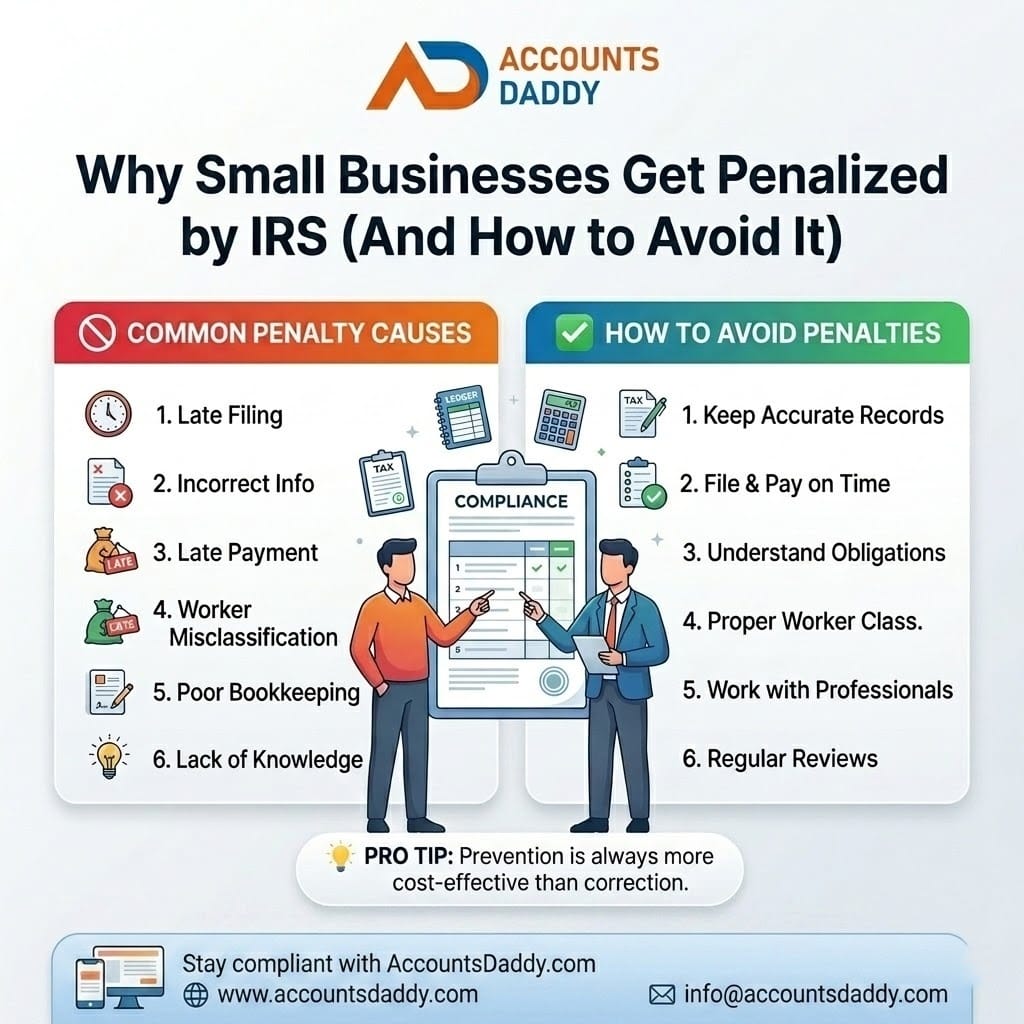
❌ Tax compliance issues
❌ Reduced business competitiveness
In today’s fast-paced economy, outdated systems can limit growth.
How Small Businesses Can Adopt AI in Accounting
1. Start with Cloud Accounting Software
Switch to platforms that offer automated bookkeeping features.
2. Train Your Team
Invest in learning AI accounting tools and digital skills.
3. Use Hybrid Accounting Systems
Combine traditional methods with automation during transition.
4. Focus on Data Security
Choose secure and compliant cloud accounting solutions.
5. Work with Experts
Partner with professionals like Accountsdaddy to implement AI efficiently.
Future of Bookkeeping: AI-Driven Accounting
The future of small business accounting lies in:
Automation
Real-time insights
Predictive analytics
Cloud-based systems
Businesses that adopt AI in accounting early will gain a strong competitive advantage.
Conclusion
AI is no longer optional,it is becoming the standard in modern accounting. While small businesses face challenges in adoption, the benefits of automated bookkeeping, financial accuracy, and real-time insights far outweigh the risks.
The sooner businesses embrace this transformation, the better positioned they will be for long-term success.
AI in bookkeeping, automated accounting, bookkeeping automation, cloud accounting software, small business accounting, AI accounting software, financial automation, real-time financial reporting, accounting technology, AI financial analytics
At Accountsdaddy, we help businesses transition to AI-powered accounting systems with ease and confidence.
Contact us today to upgrade your bookkeeping and stay ahead in the digital era.
Comments are closed