 Pakistan
 UAE
UAE KSA
KSA UK
UK Canada
 USA
USA Australia
 French
 German
 Italian
 Chinese
 Dutch
Dutch
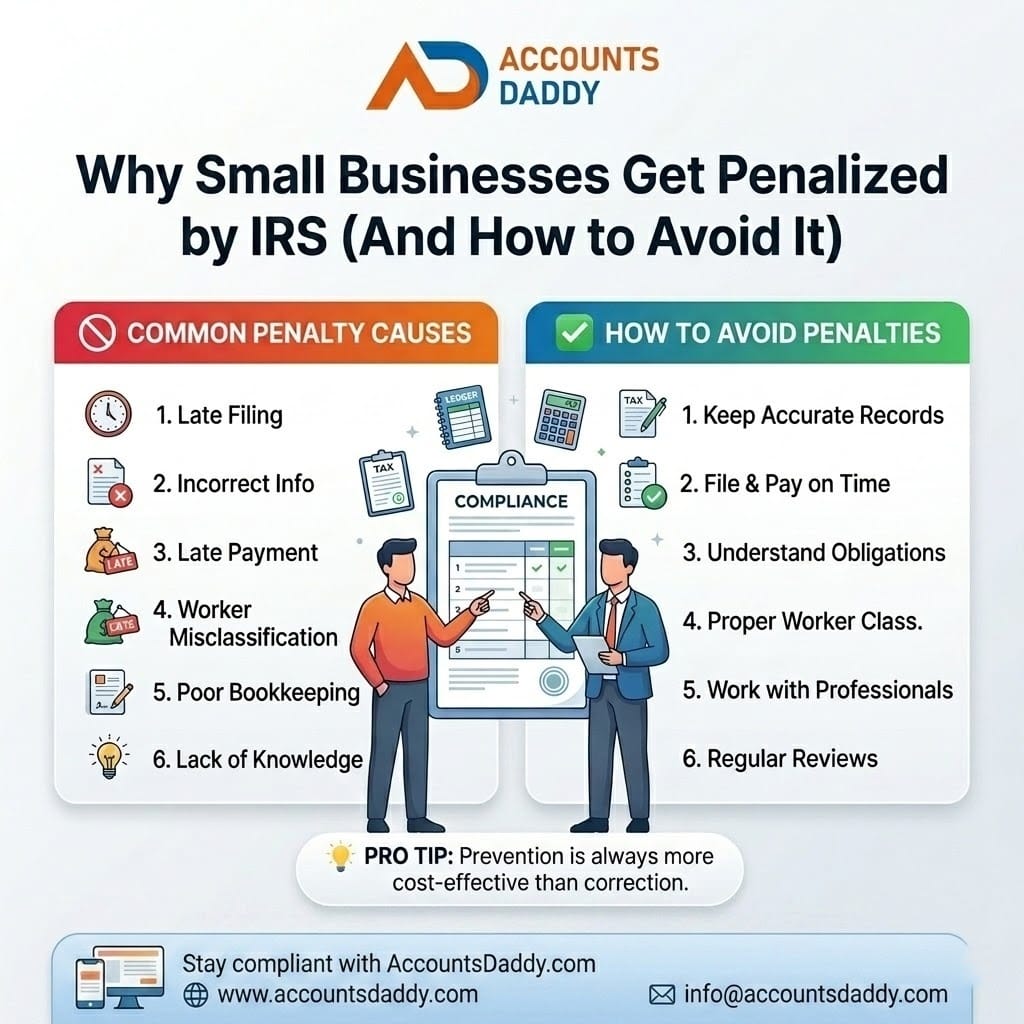
Small businesses often face unexpected penalties from the IRS, and in most cases, these penalties are preventable. Understanding the common reasons behind IRS penalties can help business owners stay compliant, avoid unnecessary costs, and maintain financial stability.
In this guide, we’ll break down why small businesses get penalized by IRS and how you can avoid these costly mistakes.
Common Reasons Small Businesses Get Penalized by IRS
- Late Filing of Tax Returns
One of the most common reasons businesses face IRS penalties is missing tax deadlines.
Failure to file on time can result in monthly penalties
Poor planning and disorganized records often cause delays
👉 Tip: Always track filing deadlines to avoid late penalties.
- Incorrect or Incomplete Information
Errors in tax returns can quickly trigger IRS penalties—even if they are unintentional.
Misreporting income
Incorrect expense categorization
Missing supporting documentation
👉 Accuracy is critical when submitting tax filings.
- Failure to Pay Taxes on Time
Filing your return is not enough—you must also pay your taxes on time.
Interest starts accumulating daily
Penalties continue to increase over time
👉 Late payments can significantly increase your total tax liability.
- Misclassification of Employees
Incorrectly classifying employees as independent contractors is a serious compliance issue.
Impacts payroll taxes
Leads to heavy IRS penalties
👉 Always follow IRS guidelines for worker classification.
- Poor Bookkeeping Practices
Disorganized financial records are one of the biggest causes of IRS penalties.
Missing receipts
Untracked expenses
Inconsistent financial data
👉 Strong bookkeeping is the foundation of tax compliance.
- Lack of Understanding of Tax Obligations
Many new business owners are unaware of their tax responsibilities.
Quarterly estimated taxes
Payroll tax requirements
Reporting deadlines
👉 The IRS does not accept lack of knowledge as an excuse.
How to Avoid IRS Penalties
- Maintain Accurate Financial Records
Use reliable bookkeeping systems
Track income and expenses regularly
Keep all documents organized - File and Pay Taxes on Time
Mark important tax deadlines
Set reminders for quarterly and annual filings
Ensure timely payments - Understand Your Tax Responsibilities
Stay updated with IRS regulations
Know which tax forms apply to your business
Ensure payroll tax compliance - Properly Classify Employees
Follow IRS classification rules
Avoid shortcuts that can lead to penalties - Work with Professional Accountants
Partnering with experts like Accountsdaddy helps you:
Ensure accurate tax filings
Stay compliant with regulations
Reduce the risk of audits and penalties
- Conduct Regular Financial Reviews
Review financial statements monthly
Identify and fix errors early
Stay prepared before tax deadlines
Pro Tip 💡
Prevention is always more cost-effective than correction.
Fixing IRS errors after receiving a notice can be expensive and time-consuming, while proactive compliance keeps your business safe.
Conclusion
IRS penalties can be a major setback for small businesses—but the good news is that they are largely avoidable.
By maintaining accurate records, understanding tax obligations, and ensuring timely filings, you can stay compliant and focus on growing your business instead of dealing with penalties

Comments are closed